东莞市餐饮装修设计|漂流料理-黃啓雲私房牛肉面工坊
This project is located on the ground floor of the South Wing of The Grand Summit, Maizidian Subdistrict, Chaoyang District, Beijing. It sits close to a subway exit, at a key node where pedestrian traffic flows in and out of the shopping mall. “Drift Cuisine” is a long-term “slow flash” event that integrates food, art, and architecture across disciplines, jointly operated by multiple parties: Drift Cuisine selects and implements catering brands and culinary content; Yishu Guang · Harper’s BAZAAR Art coordinates artists to complete thematic art creations for each session. Compared with conventional pop-up stores, it has a longer operational cycle; and compared with traditional restaurants, it retains a flexible and changeable character.
▼ 地铁出口视角

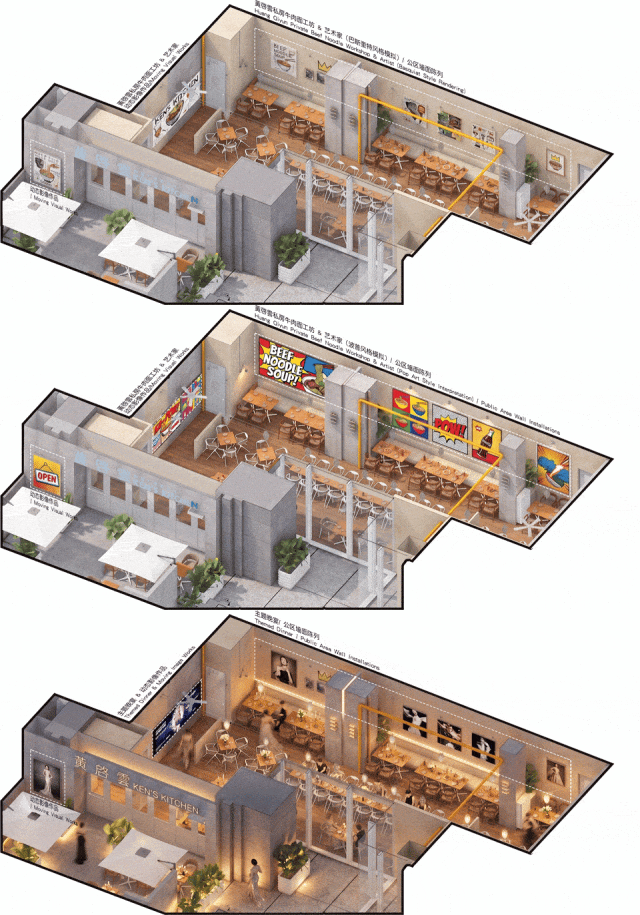
▼ 公区墙面与展示界面轴测图,
Public Area Walls & Display Interfaces Axonometric Diagram
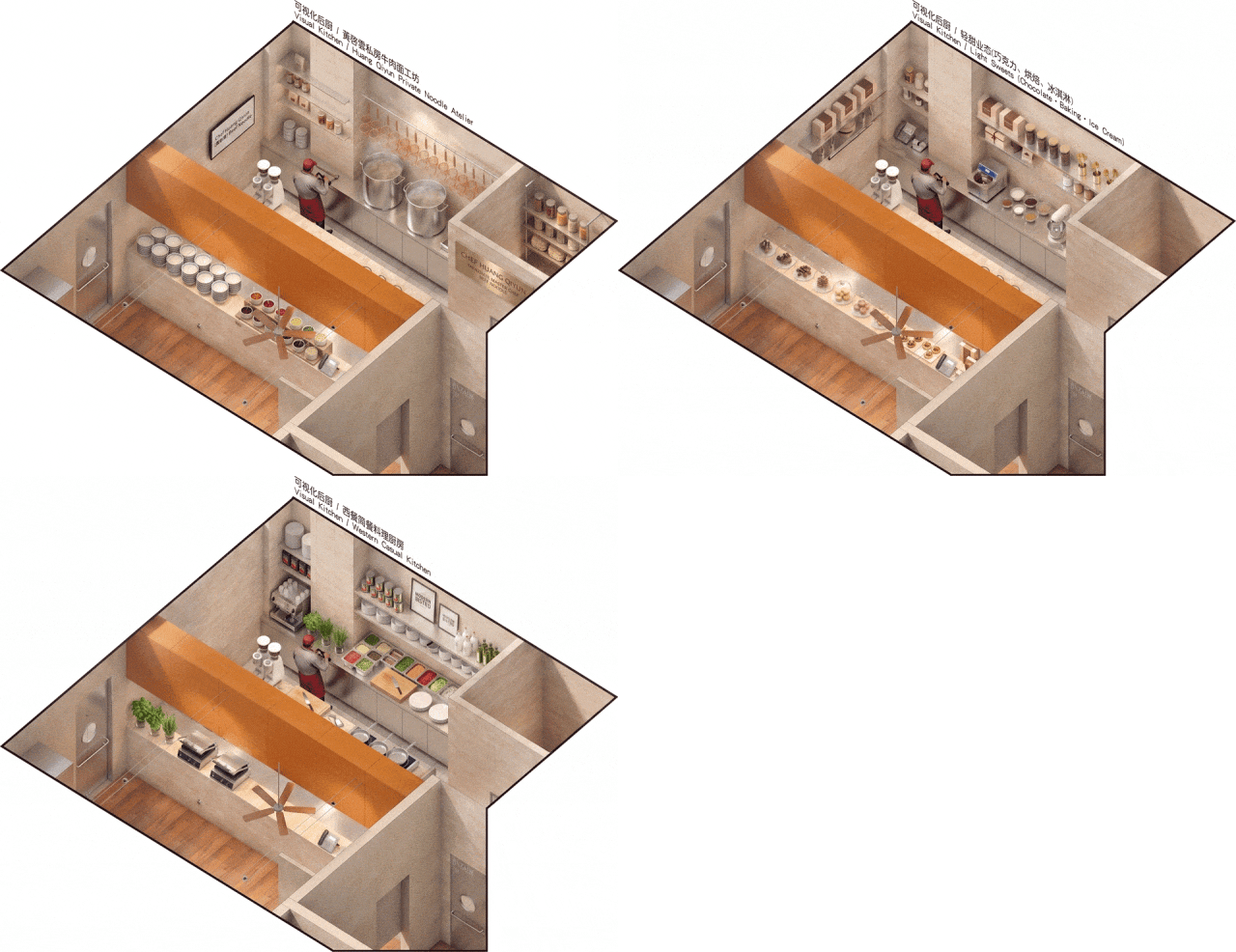
▼ 多业态兼容后厨轴测图,
Multi-functional Kitchen for Diverse Formats Axonometric Diagram
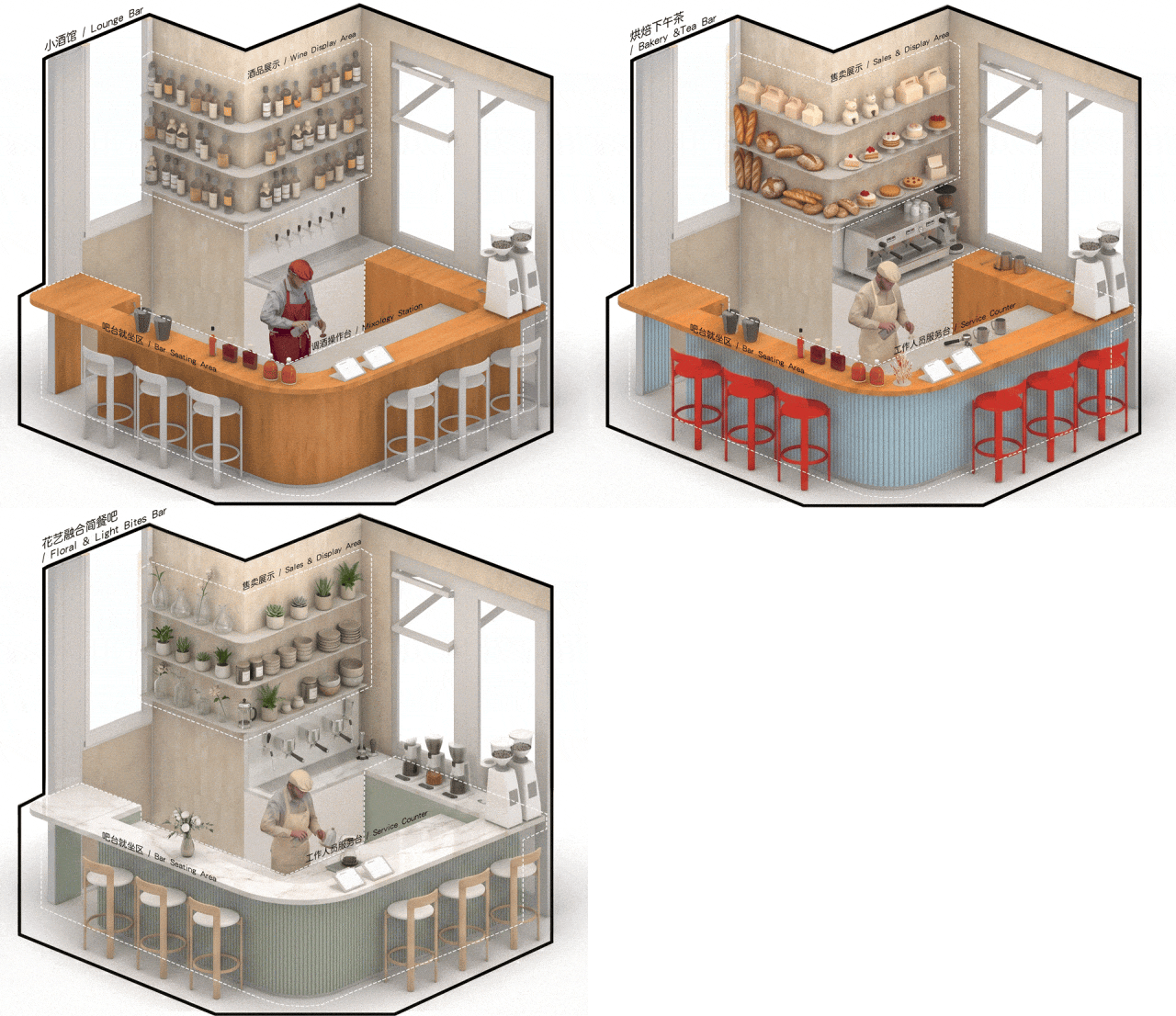
▼ 前厅吧台轴测图,Front counter Axonometric Diagram
▼ 面向商场公共区域的橱窗轴测图,
Display window facing the mall’s public area Axonometric Diagram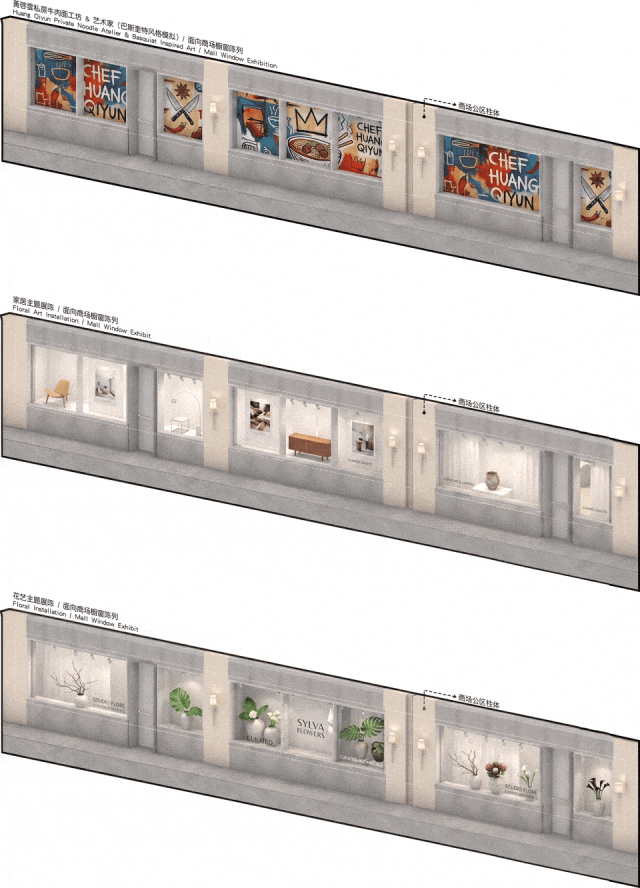
As an event venue, the space constantly changes its themes and content. In response to the needs of dynamic operations, the design focuses on providing a variable activity zone and a multi-format compatible back kitchen, with reserved adjustment conditions to accommodate ongoing content changes. The public-area walls and display interfaces serve an art-display function, adapting to each session’s theme and allowing replacement of artworks, graphics, texts, video footage, and other content. The back kitchen’s MEP, equipment, and layout are uniformly standardized to accommodate diverse catering formats. When brands or themes are updated, there is no need to alter finishes, pipelines, or major equipment—only small mobile kitchen utensils need to be adjusted, ensuring long-term dynamic operation. The front counter is the main interactive area for customers. Its surface finishes, brand signage, food displays, soft furnishings, and ancillary decorations can all be replaced. A display window facing the mall’s public area serves as the external image interface, where brand visuals, thematic scenography, and promotional installations can be entirely replaced.
▼ 室内空间,Indoor space

Users and the content expressed are constantly changing—so how should the space leave room for the unknown and for change? If it is too “full,” it becomes a constraint. Therefore, our design strategy is “to step back and subtract”: stripping away excessive decoration to provide a qualified “foundation” that can carry uncertain future content insertions.
▼ 建筑立面,Building Facade

新建外立面采用仿清水混凝土覆膜肌理漆,搭配原色喷砂不锈钢板门扇,两种材质质感纯净、组合利落,奠定出干净素雅的视觉基调。整体色调以灰色为主导,蓝色店招、米白色遮阳伞与松石绿餐椅点缀其间,色彩对比明快,为户外空间增添了丰富的层次与活力。店铺正对地铁出入口,占据开阔街角,户外以矮墙、种植槽与绿植围合成半开放式庭院,既为就餐区提供适度私密屏障,也有效区隔了店铺与外部公共空间的视线关系。大面积玻璃开窗打通室内外的视觉联系,双向视线互通,人与空间互为街景,营造出通透而富有生机的场所氛围。
The newly built facade uses an imitation fair-faced concrete textured coating, with doors in natural sandblasted stainless steel. The two materials are simple in texture and harmoniously matched, forming a clean, elegant base. The overall color tone is grey, with blue signage, off-white umbrellas, and turquoise-green dining chairs as color accents, creating vivid visual contrast and enriching the outdoor spatial layering. The store directly faces the subway entrance/exit and sits at an open street corner. Outdoors, low walls, planter boxes, and greenery form a semi-enclosed courtyard, which ensures privacy for the dining area while defining the visual boundary between the store and the external public space. Large windows connect interior and exterior views, allowing two-way sightlines, so that people and space become part of each other’s street scenes.
▼ 半围合的外摆空间,Semi-enclosed Outdoor Seating Area

▼ 立面门窗、绿植与松石绿餐椅,
Facade doors/windows, greenery, and turquoise-green dining chair

▼ 立面形成向内引导的氛围,
Inward-guiding Atmosphere Created by the Facade

▼原色喷砂不锈钢板门窗系统,
Original-color Sandblasted Stainless Steel Plates Door & Window System

Redundant decorations are eliminated from hard furnishings. The original texture and cast finish of concrete are fully preserved across the space, with partial areas painted with warm beige textured paint. This method not only controls costs effectively, but also creates an inclusive spatial base that can flexibly fit various art installations and match the dynamic operation mode of the slow pop-up space.
▼ 室内就餐区,Indoor Dining Area

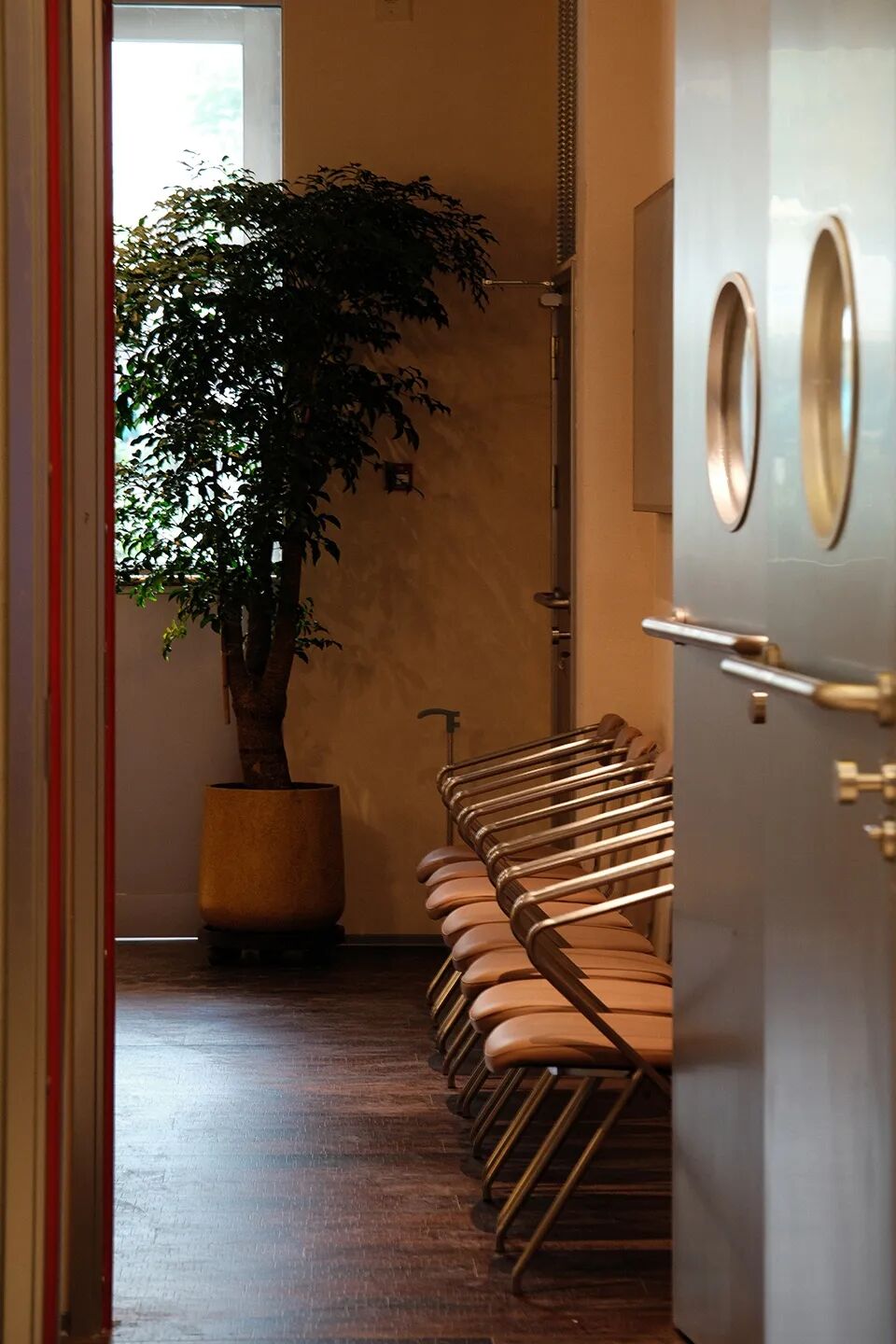
▼ 等候区,Waiting Area
The electromechanical systems are designed in harmony with the overall spatial style. Overhead electromechanical pipelines are exposed in their original layout and wrapped with circular aluminum foil insulation layers, while gas pipelines are uniformly painted yellow. Hemp ropes are wound around some columns to soften the tough texture of metal pipelines with natural materials, integrating all equipment into the overall space perfectly.
▼ 顶部管道与消防栓门,Overhead pipes and fire hydrant door

▼ 壁灯与燃气、排水管道,Wall Lamp, Gas & Drainage Pipelines

▼ 管道与吊装风扇,Pipelines & Ceiling-mounted Fan

▼ 燃气管道与防火门,Gas Pipeline & Fire Door

After comparing and eliminating more than sixty types of luminaires one by one, we finally selected polyhedral geometric glass pendant lights as the main lighting fixtures. Compared with square and irregular lamps, these pendant lights support flexible hanging angles and present a neat visual effect from all perspectives, avoiding visual clutter on the ceiling. To adapt to atmospheric changes during different operating hours, all luminaires in the store are equipped with dimming and color temperature adjustment functions. The space features a bright and airy atmosphere in the daytime and shifts to a dim and tranquil ambience at night, catering to diverse usage scenarios.
▼ 多面体几何玻璃吊灯,Polyhedral Geometric Glass Pendant Lights


The kitchen facade adopts a three-section structure. The lower part is fully paved with brown handmade clay bricks which are stain-resistant and easy to clean. The upper part is fitted with wood veneers to continue the wood tone style of the front area. Transparent fire-resistant glass is applied in the middle section to create an open kitchen, breaking the visual barrier between the front house and the kitchen. The cooking process of rotating head chefs each season becomes the most vivid scene in the space.
▼ 后厨立面,Kitchen Facade


▼ 黃啓雲老师在做面,Chef Huang Qiyun Making Noodles

The spatial design of “Drifting Cuisine” lies not only in what we create, but also in what we choose to leave out. When the design steps back and turns into a pure container embracing changes, it stands in a more enduring and stable posture to underpin this continuously evolving cross-boundary experiment.
▼ 平面布置,Floor Plan

联合出品:漂流料理 × 一束光芭莎艺术 × 申江海建筑事务所
项目名称:漂流料理-黃啓雲私房牛肉面工坊
项目地址:北京市朝阳区麦子店街道官舍南区1楼F109
设计公司:申江海建筑事务所|SA Architects
项目类型:改造设计
建筑面积:289.59㎡
设计时间:2026.01-2026.03
建造时间:2026.03-2026.05
东莞市峰铖装饰有限公司,东莞市火锅店装修,东莞市茶餐厅装修,东莞市中式餐厅装修,东莞市日本料理店装修,东莞市韩国料理店装修,东莞市烤肉店装修,东莞市主题餐厅装修,东莞市专业餐饮店铺装修设
东莞市峰铖装饰有限公司
东莞市专业餐饮店铺装修设计
图文源自网络